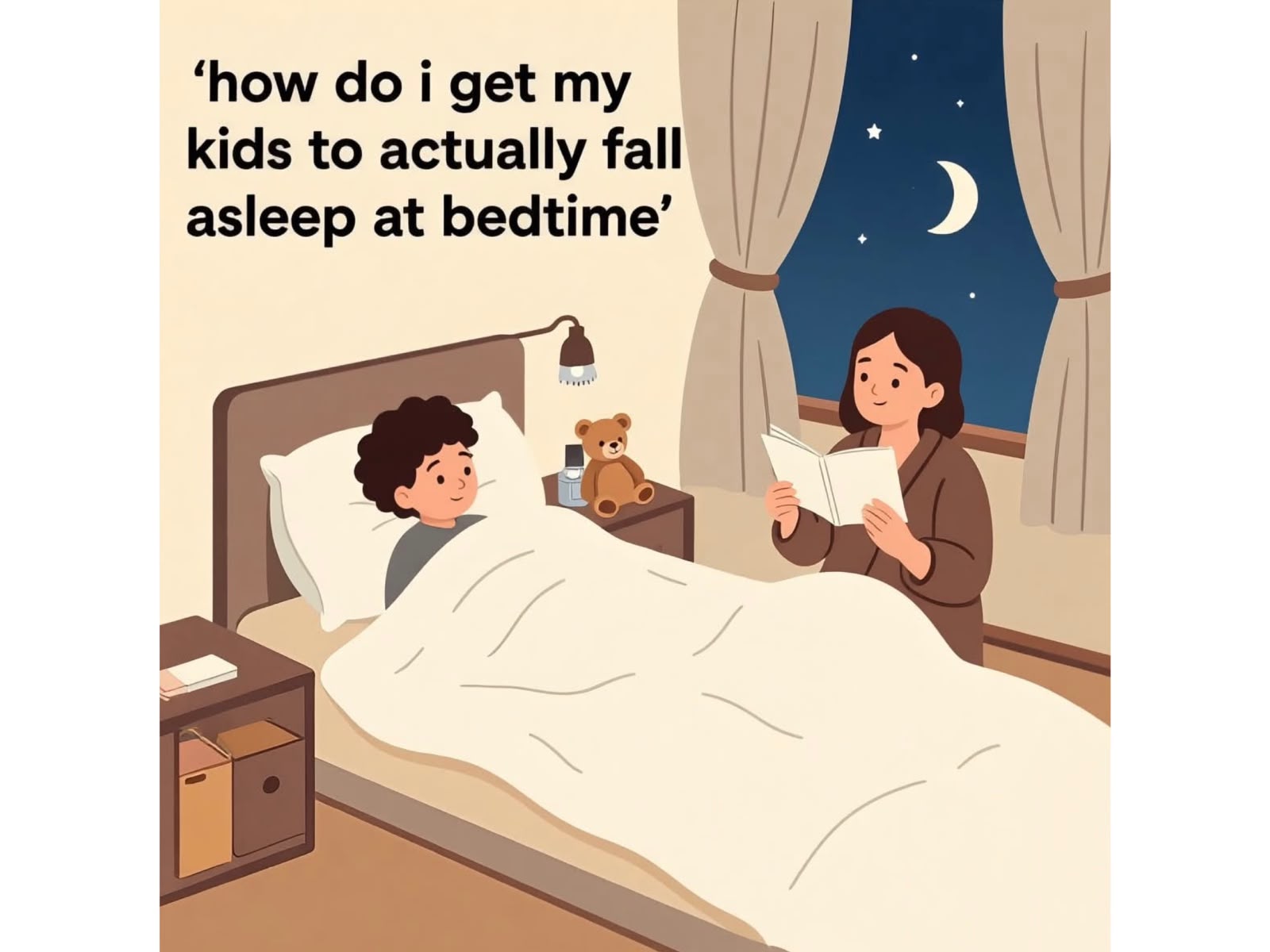
Getting children to fall asleep at bedtime can sometimes feel like the hardest part of the day. One minute they’re brushing their teeth, and the next they’re asking for one more story, one more drink of water, or one more hug. If this sounds familiar, you’re not alone.
The good news is that most bedtime struggles can be improved with consistency, patience, and a calming routine. Helping children fall asleep isn’t about making them sleep instantly, it’s about creating the right environment and habits that make sleep come naturally.
🛏️ Why Do Kids Resist Bedtime?
Children may resist bedtime for many reasons, including:
- They aren’t tired enough.
- They are overstimulated from screens or active play.
- They want more time with their parents.
- They feel anxious or afraid of the dark.
- Their bedtime routine changes from day to day.
Understanding the reason behind bedtime resistance is the first step toward solving it.
⏰ Create a Consistent Bedtime Routine
Children thrive on routines because they know what to expect.
Try following the same order every evening, such as:
- Take a warm bath.
- Brush teeth.
- Put on pajamas.
- Read a bedtime story.
- Give hugs and kisses.
- Turn off the lights.
Repeating the same routine every night helps your child’s brain recognize that it is time to sleep.
📖 Read a Calm Bedtime Story
Reading together is one of the best ways to help children relax.
Choose gentle stories with calming endings instead of exciting adventures.
Stories about sleepy animals, peaceful forests, stars, or friendly characters can help children wind down and prepare for sleep.
Reading also strengthens the bond between parents and children while creating positive bedtime memories.
📱 Limit Screen Time Before Bed
Phones, tablets, televisions, and video games can make it harder for children to fall asleep.
The bright light from screens can reduce the body’s natural production of melatonin, the hormone that helps us feel sleepy.
Try turning off screens at least one hour before bedtime and replace them with quiet activities like:
- Reading
- Coloring
- Listening to soft music
- Building simple puzzles
🌙 Keep the Bedroom Calm
A peaceful sleep environment makes a big difference.
Helpful ideas include:
- Keeping the room cool and comfortable.
- Using dim lighting before bed.
- Reducing loud noises.
- Providing a favorite blanket or stuffed animal for comfort.
- Using blackout curtains if outside light is bright.
A calm bedroom helps children associate their room with rest and relaxation.
🧸 Let Kids Feel Safe
Some children stay awake because they feel nervous at night.
Parents can help by:
- Offering reassurance.
- Using a small night-light if needed.
- Checking for “monsters” together in a playful way.
- Letting children know you’ll be nearby.
Feeling secure makes it easier for children to relax and fall asleep.
🍎 Avoid Sugary Snacks Before Bed
Large meals, sugary treats, or caffeinated drinks close to bedtime may make it harder for children to settle down.
Instead, offer light bedtime snacks if they’re hungry, such as:
- A banana
- Yogurt
- Whole-grain crackers
- Warm milk (if appropriate for your child)
💤 Make Sure Kids Get Enough Activity During the Day
Children who spend time running, playing, and being active during the day often fall asleep more easily at night.
Encourage activities like:
- Outdoor games
- Bike riding
- Dancing
- Sports
- Walking with family
Regular physical activity supports healthy sleep.
🤗 Be Patient and Consistent
If your child gets out of bed repeatedly, calmly guide them back without arguing or turning it into a game.
Consistency is important.
Children usually adjust more quickly when bedtime expectations stay the same every night.
🚩 When to Talk to a Doctor
Occasional bedtime struggles are normal.
However, consider speaking with your child’s healthcare provider if your child regularly:
- Snores loudly or has trouble breathing during sleep.
- Has frequent nightmares or night terrors.
- Sleeps very little despite good routines.
- Seems unusually tired during the day.
- Has sleep problems that continue for several weeks and affect daily life.
A healthcare professional can help identify any underlying sleep concerns.
🌟 Final Thoughts
Helping children fall asleep at bedtime takes time, consistency, and lots of patience.
A calming bedtime routine, fewer distractions, a comfortable sleep environment, and plenty of reassurance can make bedtime much smoother.
Remember, every child is different. What works for one child may take a little adjustment for another. The goal isn’t perfection, it’s helping your child feel safe, relaxed, and ready for a good night’s sleep.
❓ Frequently Asked Questions (FAQs)
1. What is the best bedtime routine for kids?
A simple routine like bathing, brushing teeth, putting on pajamas, reading a story, and saying goodnight works well for many children.
2. How long should a bedtime routine last?
Most bedtime routines work best when they last about 20–30 minutes.
3. Should I let my child use a tablet before bed?
It’s generally best to avoid screens for at least an hour before bedtime because they can make falling asleep more difficult.
4. Why does my child keep getting out of bed?
Children may seek attention, feel anxious, or simply test boundaries. Calm, consistent responses usually help over time.
5. What kind of bedtime stories help children sleep?
Gentle stories with calm settings, friendly characters, and peaceful endings are often the most relaxing.
📢 Important Note
This article is for educational and informational purposes only and is not a substitute for professional medical advice. If your child has ongoing sleep difficulties, loud snoring, breathing problems during sleep, or persistent insomnia, consult a qualified healthcare professional for personalized guidance.